
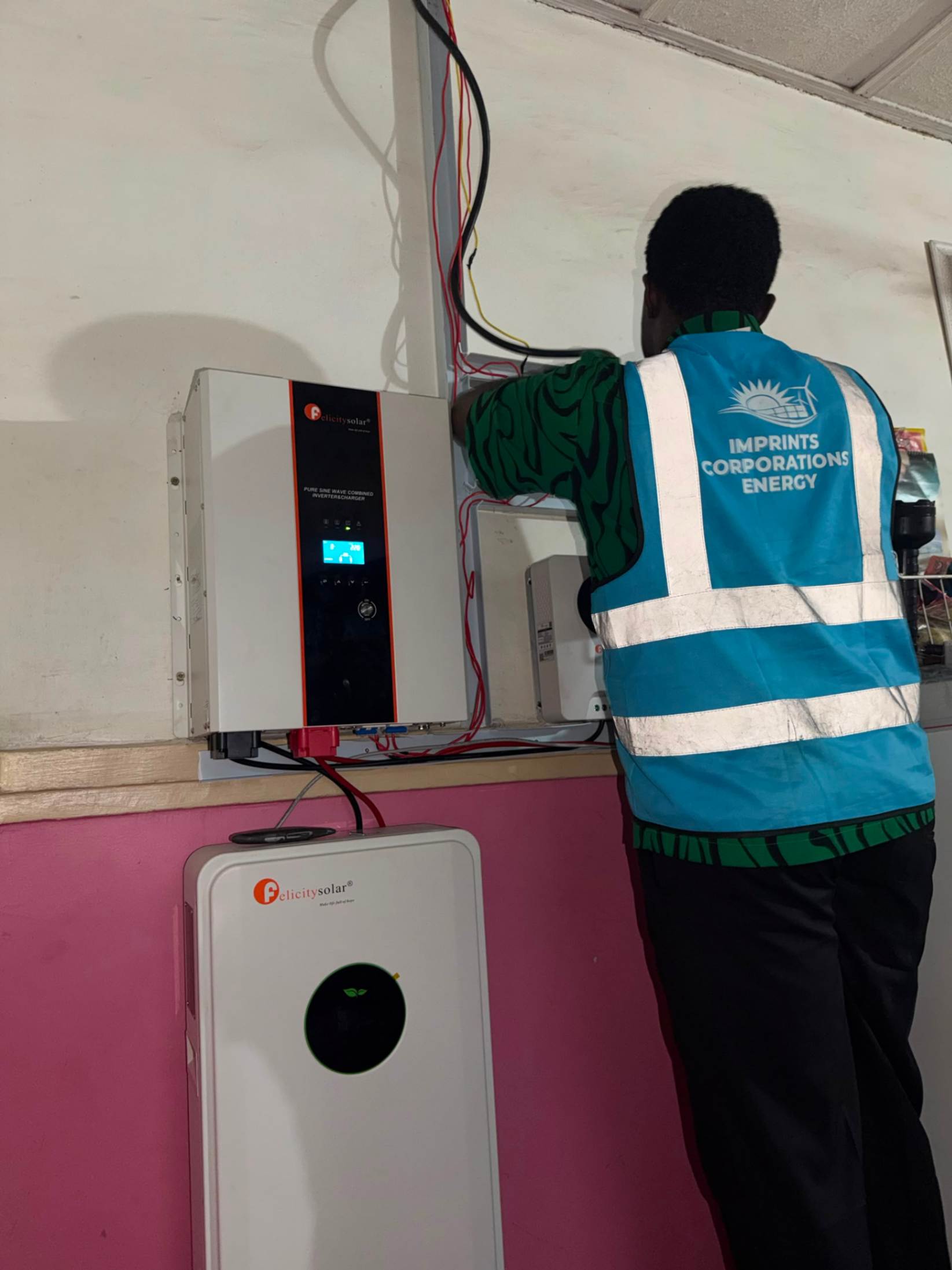
The #1 Mistake People Make When Sizing a Solar Battery (And How to Avoid It)
If you have ever had a customer complain that their solar battery died after just six months or stopped holding a charge overnight, you are not alone. In Nigeria’s fast-growing renewable energy market, battery failure is the single most common complaint from solar home and business owners.
Energy Tips Energy Solutions Solar Engineering Training Solar Tips
d129d396-2f53-4434-ae0f-bc2da1b42f0b

Most people immediately blame the manufacturer or assume they bought a fake product. But more often than not, the real culprit isn’t the battery quality. It is under-sizing.

Sizing a solar battery system is about understanding energy dynamics, depth of discharge, and real-world appliance loads. Here is the exact mistake most installers make, and how getting it right can mean the difference between a system that lasts 10 years and one that fails in under six months

The Big Mistake is Counting Your Appliances Instead of Counting the Hours

The most common mistake people make when buying a solar battery is focusing only on what appliances are turned on, instead of how many hours they will run.

Think of a solar battery like a water tank:

  • Watts (W) is how fast the tap flows.
  • Hours (h) is how long you leave the tap running.
  • Watt-hours (Wh) is the total amount of water that leaves the tank.

If you only look at how fast the water is flowing (Watts) and forget how long the tap stays open (Hours), your tank will run completely dry much faster than you expect.

How the Mistake Happens in Real Life

Imagine a customer wants to power just a few basic items overnight:

  • Deep Freezer: 200 Watts
  • Television: 100 Watts
  • 4 Light Bulbs: 40 Watts
  • Standing Fan: 60 Watts

Adding those up gives 400 Watts.

To many people, 400 Watts sounds like a small, lightweight load. An installer might assume that a single standard 200Ah battery can easily handle it. But that line of thinking forgets the most important, the time factor.

Why This Can Destroy Your Battery

A single 200Ah lead-acid or gel battery holds a maximum of 2,400 Watt-hours of energy when brand new.

However, to prevent permanent damage, you should never drain a tubular or gel battery past 50%. That means your single battery actually gives you only 1,200 Watt-hours of safe, usable energy.

Now, let’s add time into the equation:

  • Running that 400-Watt load for an 8-hour night uses 3,200 Watt-hours of energy ().
  • But your battery safely holds only 1,200 Watt-hours.

Because the battery is far too small for an 8-hour stretch, it gets drained almost down to 0% every single night. Doing this forces the battery to work beyond its limit, ruining its internal chemistry. Within three to six months, the battery stops holding a charge, drops in voltage, and fails completely.

What Under-Sizing Does to Your Solar Battery

When a solar battery is systematically under-sized for its connected load, three main issues occur:

  1. Severe Sulfation (Lead-Acid / Gel / Tubular): Deeply discharging a battery leaves lead sulfate crystals on the plates. If the solar array can’t fully recharge the bank to 100% the next day, these crystals harden, permanently reducing the battery’s capacity.
  1. Thermal Runaway & Swelling: Under-sized batteries forced to deliver high discharge currents overheat rapidly. Over time, the casing swells, internal separators break down, and the unit becomes a safety hazard.
  1. Premature BMS Shutdowns (Lithium / LiFePO4): Even with modern Lithium Iron Phosphate batteries, under-sizing causes the Battery Management System (BMS) to trip constantly on low-voltage cut-offs or over-current protection, leading to sudden power blackouts.

How Professional Engineers Size a Battery Bank Correctly

To prevent early battery degradation, professional solar engineers follow a structured 4-step sizing formula:

  1. Calculate Total Daily Watt-Hours: Multiply the wattage of each appliance by the exact number of hours it runs daily.
  1. Factor in Inverter Efficiency: Inverters lose 10%–15% of energy during DC-to-AC conversion. Divide your total Watt-hours by 0.85.
  1. Apply the Depth of Discharge (DoD) Limit:
  • For Gel/Tubular: Multiply usable power needs by 2 (50% DoD limit).
  • For Lithium (LiFePO4): Multiply usable power needs by 1.25 (80% DoD limit).
  1. Account for Days of Autonomy: Ensure the bank can support critical loads during rainy or cloudy days when solar yield drops.

Master Solar System Design with Hands-On Experience

Understanding the math behind load calculation is essential, but putting it into practice in the field is where real solar engineers are made. Wiring battery banks in series vs. parallel, measuring open-circuit voltages with precision multimeters, and setting up charge controller parameters are skills you can only master with real tools in your hands.

At Imprints Corporations Energy, we bridge the gap between theoretical knowledge and real field execution.

Whether you are an engineering graduate looking for job-ready technical skills or an installer wanting to upgrade to component-level troubleshooting, our 3-Month Practical Solar Engineering Training Program in Owerri provides:

  • 100% hands-on training with live solar arrays, high-capacity battery banks, and hybrid inverters.
  • Load profiling, system design, and safety protocols.
  • Component-level PCB troubleshooting and inverter board repairs.
  • Industry-recognized certification and direct career pathways.
  • Flexible installment payment options to make learning accessible.

Are You Ready to Build a Successful Career in Clean Energy?

Don’t guess your solar setups—learn to design and build system installations that last for years.

  • Call / WhatsApp: 0813 676 0414
  • Visit our head office at Plot 100 Area W, PH Road, Owerri, Imo State

Posted on:

Get energy tips in your inbox

Recent Blogs

Lithium vs Gel Battery in Nigeria: Discover the Best Solar Battery for Your Home

Choosing the right battery is one of the most important decisions you will make when installing a solar inverter system. Your battery determines how much energy you can store, how long your appliances can run during a power outage, and how often you may need to replace your storage system.

Top 10 Solar Companies in Imo State

Uninterrupted power is the backbone of personal comfort, business growth, and financial stability. Whether powering a home or running an enterprise in Owerri, Imo State, partnering with the right solar provider drastically reduces generator overhead and shields you from grid instability.

5 Powerful Renewable Energy Solutions in Nigeria: Discover the Best Options for a Cleaner, Brighter Future

Reliable electricity is essential for your home, business, and everyday activities. However, when you have to deal with power interruptions, rising generator expenses, and the cost of keeping your appliances running, finding a dependable alternative becomes important. This is why exploring the 5 renewable energy solutions in Nigeria can help you understand the options available for a cleaner and more sustainable energy future.

Is Solar Installation in Nigeria Worth the Cost? Real 2026 ROI Breakdown

Wondering if solar power is worth it in Nigeria in 2026? Discover the 5-year ROI breakdown, fuel savings, property value impacts, and payback timelines.

How Much Does Solar Installation Cost in Nigeria in 2026? Factors That Affect the Price

Are you tired of high fuel costs and power blackouts? Discover how much solar installation actually costs in Nigeria in 2026, what drives the price, and how to avoid costly installation mistakes for your home or business.

Can a Solar Inverter Be Too Big? What First-Time Users Must Know

A larger inverter isn't automatically the best choice for your home or business. In some situations, having more capacity can provide useful room for future expansion. But choosing an inverter that is significantly larger than what your loads require can also mean spending more money without getting a meaningful benefit from that extra capacity.

Related Blog posts

Lithium vs Gel Battery in Nigeria: Discover the Best Solar Battery for Your Home

Choosing the right battery is one of the most important decisions you will make when installing a solar inverter system. Your battery determines how much energy you can store, how long your appliances can run during a power outage, and how often you may need to replace your storage system.

Top 10 Solar Companies in Imo State

Uninterrupted power is the backbone of personal comfort, business growth, and financial stability. Whether powering a home or running an enterprise in Owerri, Imo State, partnering with the right solar provider drastically reduces generator overhead and shields you from grid instability.

5 Powerful Renewable Energy Solutions in Nigeria: Discover the Best Options for a Cleaner, Brighter Future

Reliable electricity is essential for your home, business, and everyday activities. However, when you have to deal with power interruptions, rising generator expenses, and the cost of keeping your appliances running, finding a dependable alternative becomes important. This is why exploring the 5 renewable energy solutions in Nigeria can help you understand the options available for a cleaner and more sustainable energy future.

Is Solar Installation in Nigeria Worth the Cost? Real 2026 ROI Breakdown

Wondering if solar power is worth it in Nigeria in 2026? Discover the 5-year ROI breakdown, fuel savings, property value impacts, and payback timelines.

How Much Does Solar Installation Cost in Nigeria in 2026? Factors That Affect the Price

Are you tired of high fuel costs and power blackouts? Discover how much solar installation actually costs in Nigeria in 2026, what drives the price, and how to avoid costly installation mistakes for your home or business.

Can a Solar Inverter Be Too Big? What First-Time Users Must Know

A larger inverter isn't automatically the best choice for your home or business. In some situations, having more capacity can provide useful room for future expansion. But choosing an inverter that is significantly larger than what your loads require can also mean spending more money without getting a meaningful benefit from that extra capacity.