
In 2026, finding a reliable power supply in Nigeria remains one of the single biggest challenges facing both families and business owners. Between continuous electricity tariff hikes, fluctuating grid power, and the soaring cost of fueling heavy generators every single week, relying on traditional energy sources has become an unsustainable strain on any budget.
It’s no surprise that thousands of Nigerians across the country are rapidly switching to solar energy for permanent power independence. However, the moment you decide to go solar, one critical question stands between you and 24/7 electricity: “How much will a complete solar system installation actually cost?”
If you’ve already started asking around, you’ve likely noticed that prices vary wildly. One installer quotes ₦1.5 million for a home system, while another quotes ₦4.5 million for what sounds like the exact same setup.
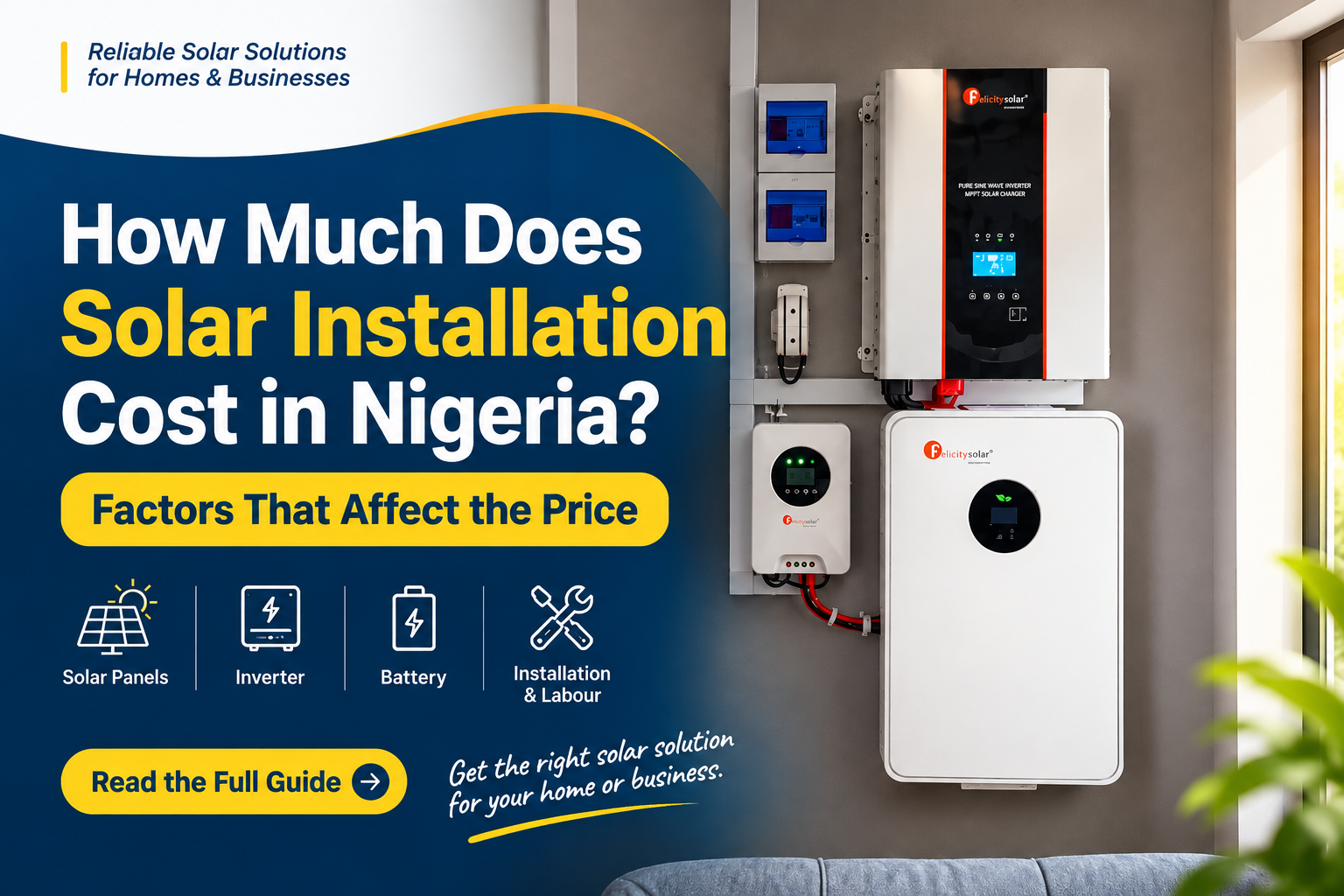
Why is there such a massive gap in pricing? Are cheap installations worth the risk, or are you overpaying for capacity you don’t even need? The short answer is that solar installation does not have a single fixed price tag. The total amount you pay depends on:
In this comprehensive guide, we break down the realistic costs of installing solar power in Nigeria in 2026. You’ll learn what typical home and business packages cost today, the critical technical factors that drive the price up or down, and how to choose an energy storage setup that protects your investment and powers your life for years to come.
As a general planning guide, a complete solar installation in Nigeria can cost from hundreds of thousands of naira for a small backup system to several millions of naira for a larger residential or commercial installation.
The cost of solar installation in Nigeria depends on your power needs, the equipment required and your installation requirements. Rather than choosing a system based on a general price estimate, explore our available solar packages to find an option that suits your home or business. Whether you need a solar solution for your home, shop, pharmacy or office, Imprints Corporations Energy can help you take the next step towards more reliable power.
Ready to find the right solar solution for your needs? Explore Our Solar Packages → www.imprintscoenergy.com
Not sure which package is right for you? Contact our team for guidance on choosing a system that matches your appliances, energy consumption and budget.
The first factor is the amount of electricity you need to use at a time.
A household that wants to power a few lights, fans, a television and phone chargers will have different requirements from a home that also needs to run refrigerators, freezers, water pumps or air conditioners.
Businesses have their own requirements, too. A pharmacy may need reliable power for lighting, computers and refrigeration, while a retail shop may prioritize lighting, fans, a point-of-sale terminal and other essential equipment.
The more demanding your electrical loads, the more carefully the system must be designed. This can increase the size and cost of the inverter, battery bank and solar array. Before choosing a system, list the appliances you want to run and identify which ones must operate simultaneously.
Battery storage is one of the most important parts of your solar installation budget.
Solar panels generate electricity when sunlight is available, while batteries store energy for use when the sun is no longer available or when the panels cannot generate enough power.
Two common battery options are:
The battery capacity you need also matters. A system designed to provide a short period of backup will usually require less storage than one expected to power essential appliances throughout the night.
When comparing quotations, do not look at the battery price alone. Ask for its capacity in kilowatt-hours (kWh), the usable capacity, warranty terms and expected performance under your intended usage.
Solar panels convert sunlight into electricity. The number of panels required depends on your daily energy consumption, the available sunlight, panel wattage, system design and the time you have available to recharge your batteries.
A home with higher daily electricity consumption may require more panels than a smaller household.
The roof or installation area must also have sufficient space for the proposed panel arrangement. Shading from trees, nearby buildings or other obstructions can affect energy production and may require changes to the panel layout.
Buying more panels does not automatically guarantee a better system. The panels must be appropriately matched to the inverter, battery and expected energy demand.
The inverter converts the electricity generated by your panels or supplied by your batteries into usable power for your appliances.
Its capacity determines how much load it can support at a given time, subject to its specifications and operating conditions.
Choosing an inverter that is too small may prevent you from running all your intended appliances together. Choosing one that is unnecessarily large can increase your initial cost without providing a meaningful benefit.
Also, you should also consider whether you need a hybrid inverter that can work with solar panels, batteries and grid electricity, and whether the inverter supports your intended battery type and system configuration.
For a deeper explanation, read our related article: Can a Solar Inverter Be Too Big? What Every Solar Buyer Should Know.
It explains why inverter sizing matters and why selecting equipment based on your actual power needs is more useful than choosing a system based on its rating alone.
Your property’s layout can affect installation costs.
For example, the available roof space, roof condition, distance between the solar panels and inverter, location of the battery bank and condition of the existing electrical wiring may influence the work required.
Some properties may need additional mounting work or electrical improvements before installation can proceed safely.
This is one reason a professional site assessment is important. It helps the installer understand the property, identify possible challenges and recommend a system that suits the actual environment.
Going solar shouldn’t feel like an impossible financial hurdle or a risky gamble.
At Imprints Corporations Energy, we believe that clean, continuous power should be accessible, transparent, and structured to give you maximum value for every money spent.
Here is how we help homes and businesses across Nigeria transition to solar without breaking the bank or wasting money on substandard equipment:
One of the most common ways people waste money on solar is by buying oversized systems or, worse, undersized setups that blow out batteries in months. Before recommending any inverter or battery setup, our engineering team conducts a thorough Load Audit. We believe that the goal is not simply to spend less, but to get the best practical value from your investment.
We analyze your actual appliance startup surges, power consumption patterns, and daily runtime requirements. This guarantees that you get a custom-engineered setup that powers your essential loads reliably without paying for capacity you won’t use.
We understand that paying 100% upfront for a high-quality solar installation can strain personal savings or business cash flow. To make the transition seamless, Imprints Corporations Energy offers flexible installment payment options. You can lock in your power independence today, begin enjoying 24/7 electricity immediately, and spread the cost conveniently over time while eliminating monthly generator fuel expenses.
Our head office is firmly rooted in Owerri (located at Plot 100 Area W, PH Road) with a fully equipped technical laboratory and dedicated field engineers. Because we have in-house expertise for component-level diagnostics and regular routine maintenance, you never have to worry about long system downtimes or abandoning an inverter over a minor technical fault. Our after sales services ensure your investment is protected for years to come.
Transitioning to solar power in 2026 is no longer just about convenience. It is a strategic financial decision that protects your household budget and business operations from unpredictable fuel prices and persistent grid failures.
While the upfront cost of solar installation in Nigeria varies based on system size, battery technology, and quality of installation, choosing the right partner ensures your system pays for itself over and over again through years of zero fuel costs and uninterrupted power.
Don’t let guesswork or low-quality setups hold you back from 24/7 electricity. Whether you want to install a fresh solar setup, upgrade your existing energy storage, or schedule a professional load audit, Imprints Corporations Energy is ready to guide you every step of the way.
Get a custom, transparent quote tailored to your exact appliances and budget today!