
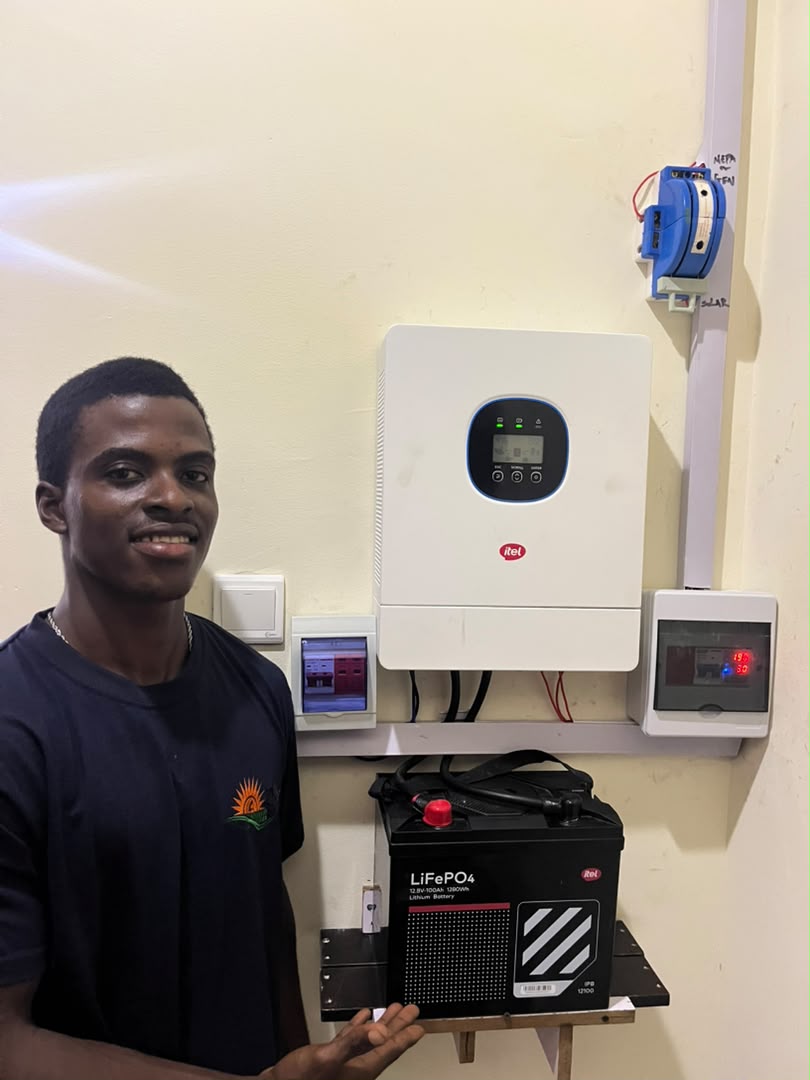
Solar inverter capacity is commonly expressed in watts (W), kilowatts (kW), volt-amperes (VA) or kilovolt-amperes (kVA), depending on the equipment and manufacturer.
In simple terms, the inverter’s capacity indicates how much electrical load it can supply at a given time, subject to its specifications and operating conditions.
For example, if your appliances require a combined load of 3,000 watts when running at the same time, an inverter needs to be capable of handling that demand.
Larger inverters generally cost more than smaller ones.
If your home only requires a certain level of power but you purchase an inverter with substantially more capacity without a practical reason, you may be paying for capacity you rarely use.
For a homeowner or business owner working with a specific budget, that money might be better allocated to other parts of the system or simply saved.
An inverter doesn’t operate in isolation so your solar panels and battery also need to be considered.
For example, buying a large inverter doesn’t automatically give you more solar energy or more battery storage. Buying a much larger inverter simply because “bigger is better” isn’t necessarily a smart investment.
You could have a large inverter connected to a system that doesn’t have enough solar generation or battery capacity to meet your intended usage.
Think of your solar system as a team where the solar panels generate energy, batteries store energy, and the inverters convert/manage electrical power for your loads. If one component is dramatically different from the others, the overall system still needs to be designed within the equipment manufacturer’s specifications.
This is a common misunderstanding.
A larger inverter does not automatically mean your appliances will run for longer during a power outage. Your backup duration is heavily influenced by your battery’s usable energy capacity and the loads you’re running.
For example, if you have a large inverter but a small battery, you can still run out of stored energy relatively quickly.
This is why inverter capacity and battery capacity should not be confused, because they serve different purposes.
Choosing the right inverter starts with understanding your actual electricity needs.
Write down the appliances and equipment you want the solar system to power.
Look at the rating label or manufacturer’s specifications for each appliance. The information may be expressed in watts, amps, VA or another unit. This helps you understand the potential electrical demand.
You don’t necessarily need to power every appliance simultaneously.
For example, a business may decide that certain equipment is essential during an outage while other equipment can remain off.
This can significantly influence the system design.
Some appliances require additional power when starting.
A professional installer should account for these requirements when selecting an inverter.
This is particularly important when your system will power motor-driven equipment.
Are you planning to add more appliances?
Are you expanding your business?
Are you planning to add another refrigerator or freezer?
A system designed with future expansion in mind can be different from one designed strictly around today’s loads.
The battery is another critical part of the design.
Suppose you have an inverter capable of supplying a large amount of power. That doesn’t mean the battery can provide that power indefinitely.
If you’re also interested in battery sizing, read our previous article https://imprintscoenergy.com/the-1-mistake-people-make-when-sizing-a-solar-battery-and-how-to-avoid-it/
Understanding battery sizing alongside inverter sizing gives you a much clearer picture of how the entire solar system should be designed.
Don’t buy a solar inverter simply because someone else has the same model or because a larger capacity sounds better. The goal is proper sizing, not simply maximum sizing.
At Imprints Corporations Energy, we believe that reliable solar starts with the right design. We assess your power needs and help you understand the solar system requirements for your home or business.
Our services include solar installation, maintenance, repairs and practical solar training.
Contact us today 081 3676 0414 or visit www.imprintscoenergy.com to book a professional solar assessment.