
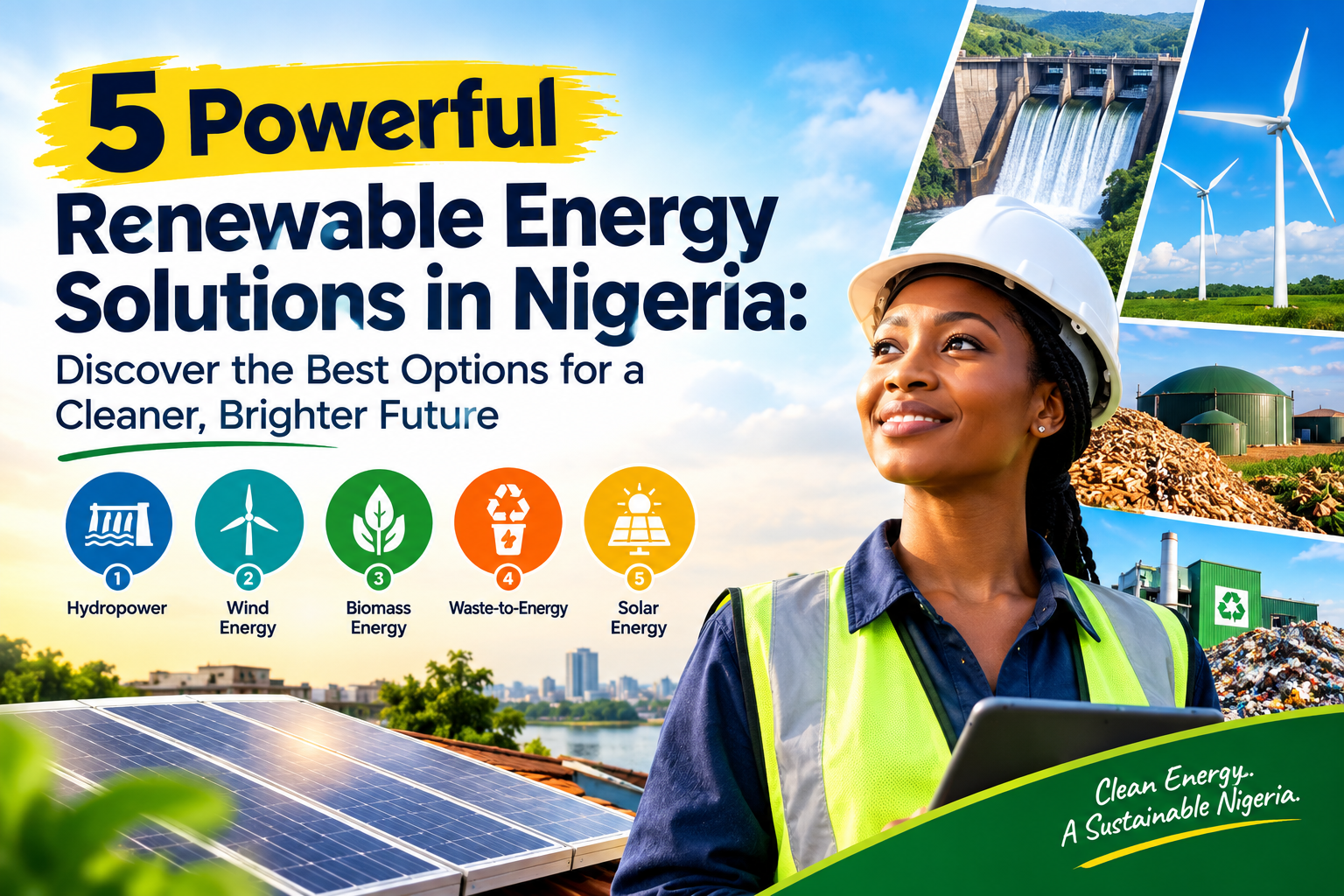
Renewable energy solution in Nigeria comes from natural sources that are replenished over time, such as sunlight, wind, flowing water, and organic materials. Nigeria has several renewable energy resources, and the country’s energy policies recognize the role of solar, hydropower, wind, and biomass in diversifying electricity supply.
The best option depends on your location, electricity needs, budget, and the type of energy you want to generate.
In this article, you will discover five renewable energy solutions in Nigeria, their characteristics, how they work, and where they may be useful.
Not every solution is suitable for every property, and some require specific environmental conditions or larger infrastructure.
Here are five options worth knowing about.
Hydropower uses the movement of water to generate electricity. In a typical hydropower plant, flowing or falling water turns a turbine, which drives a generator to produce electrical power.
Nigeria already uses hydropower as part of its electricity mix, and both large and small hydropower systems are recognised in the country’s energy planning.
Key characteristics of hydropower
How can hydropower benefit you?
At a community or utility level, hydropower can contribute significant electricity to the wider power supply. Smaller systems may also serve suitable rural or remote locations.
However, hydropower is not a practical option for every homeowner or business. Building a dedicated hydropower facility requires appropriate water resources, technical planning, and considerable infrastructure. If you need an electricity solution for your shop, office, or residence, you may want to consider options that can be installed directly on your property.
Wind energy uses turbines to convert the movement of air into electricity. When wind turns a turbine’s blades, the connected generator produces electrical power.
Although wind energy is used in different parts of the world, its practicality in Nigeria depends on local wind speeds, consistency, terrain, and project economics. The Energy Commission of Nigeria’s National Energy Master Plan (2022) includes wind energy in national energy planning and outlines its development as an alternative energy resource where it is technically and economically feasible.
Key characteristics of wind energy
How can wind energy benefit you?
Where wind conditions are suitable, wind power can support electricity generation and diversify the energy supply. Larger projects can contribute power to a community or electricity network.
However, wind energy is not simply a matter of installing a turbine anywhere. You need suitable wind conditions, sufficient space, appropriate equipment, and a plan for installation and maintenance.
For many individual homes and small businesses, a wind system may be less straightforward than a rooftop or ground-mounted solar installation. Before investing, assess the renewable resources available at your location rather than assuming every technology will deliver the same results.
Biomass energy comes from organic materials such as agricultural residues, wood waste, and certain types of animals or plant waste. Depending on the technology, these materials can be used to produce heat, electricity, or fuel.
Nigeria has agricultural and organic waste resources that may support biomass applications when collection, processing, and conversion are managed properly. Biomass is also identified in national renewable energy policy and research activities.
Key characteristics of biomass energy
How can biomass energy benefit you?
Biomass can be valuable for agricultural businesses, food-processing operations, and industries that produce suitable organic waste. For example, a facility with a consistent supply of agricultural residues may be able to explore using those materials for heat or electricity.
However, biomass is not automatically clean or cost-effective in every situation. Poor combustion practices can cause air pollution, and an unreliable supply of materials can affect the system’s performance.
If you are considering biomass, evaluate the quantity and quality of available materials, the technology required, operating costs, and environmental safeguards before making a decision.
Waste-to-energy systems convert certain waste materials into useful energy through processes such as controlled combustion, anaerobic digestion, or other treatment technologies. The appropriate process depends on the waste type and the intended energy output.
Nigeria’s Federal Ministry of Power identifies waste-to-power as one of the renewable energy projects being pursued in the country. The Ministry states that it is collaborating with the Federal Ministry of Environment on the Waste-to-Power Project and other renewable energy initiatives.
Key characteristics of waste-to-energy
How can waste-to-energy benefit you?
Waste-to-energy can be useful for municipalities, industrial facilities, farms, and organizations that generate large volumes of suitable waste. In some settings, it can address waste-management challenges while recovering energy.
For example, organic waste from food-processing activities may be suitable for anaerobic digestion, which produces biogas that can be used as a fuel under the right conditions.
However, waste-to-energy is usually not a simple plug-and-play solution for an individual home or small shop. It may require specialized equipment, waste collection arrangements, technical expertise, and regulatory oversight. For this reason, its suitability depends on the scale of the project and the type of waste available.
Solar energy uses sunlight to generate electricity or heat. For homes and businesses looking for greater control over their power supply, solar photovoltaic (PV) systems are one of the most accessible renewable energy technologies to explore.
A solar PV system typically includes solar panels, an inverter, and batteries. Panels generate electricity from sunlight, the inverter converts it into a usable form for your appliances, and the batteries store energy for later use. Read our previous article on the components of a solar system https://imprintscoenergy.com/solar-energy-for-beginners-how-does-a-solar-system-work/
Nigeria has considerable solar resources, and solar PV can be deployed at different scales, from small off-grid systems to residential, commercial, and larger power projects.
Key characteristics of solar energy
Solar energy offers a practical way to address some of the everyday electricity challenges you may experience. Check our previous article to find out the real benefits of switching to solar energy in 2026 /https-imprintscoenergy-comis-solar-installation-in-nigeria-worth-the-cost-real-2026-roi-breakdown/
At Imprints Corporations Energy, we help homes and businesses explore solar installation solutions based on their power requirements. Our services include solar installation, maintenance, and repair.
If you want to reduce generator dependence and explore a more reliable power option, solar energy is worth considering.
Ready to explore your options? Visit our website Imprints Corporations Energy to learn more about our solar solutions and discuss your installation needs.
Now that you understand these five renewable energy options, how do you decide which one is right for you? The best solution depends on your location, electricity demand, budget, available resources, and long-term plans. Use the following considerations to guide your decision.
Start by listing the appliances and equipment you want to power. Include their power ratings, how long you use them, and which ones need to operate at the same time.
For a business, identify the equipment that is essential for daily operations. For your home, decide whether you want to support only basic appliances or a wider range of electrical loads.
This information helps you avoid choosing a system that cannot meet your needs.
Different renewable energy sources require different conditions. Hydropower needs a suitable water resource, wind energy needs adequate wind, and biomass systems need a consistent supply of appropriate organic material.
Solar energy depends on sunlight, but it can be installed on many homes and commercial properties after assessing available space, shading, and electrical requirements.
Do not focus on the purchase price alone. Consider installation, maintenance, replacement components, operating costs, and the expected service life of the equipment.
For solar, battery choice and capacity can significantly affect the initial investment. Ask your installer to explain what is included in the quotation and what additional expenses you may need to plan for.
Renewable energy equipment must be selected, installed, and maintained appropriately. A professional assessment can help you understand your options, avoid incompatible components, and set realistic expectations about performance.
For a solar installation, request a load assessment and a clear explanation of the proposed panels, inverter, batteries, protection equipment, and warranty terms.
Take the next step with Imprints Corporations Energy. If you are considering solar for your home, shop, pharmacy, or office, visit www.imprintscoenergy.com to explore our solutions and contact our team.
Solar energy can be a practical option for many homes because a system can be designed around selected household appliances and installed on a suitable roof or ground area. However, the right system depends on your electricity consumption, budget, property conditions, and backup requirements.
Common characteristics include using naturally replenished resources, offering alternatives to fossil-fuel-based energy, and having environmental impacts that depend on the technology and how it is implemented. Solar uses sunlight, wind uses moving air, hydropower uses flowing water, and biomass uses suitable organic materials.
Yes, a properly designed solar system may reduce your dependence on grid electricity and generator fuel. Your actual savings depend on the installation cost, how much energy the system supplies, your usage habits, maintenance needs, and future battery replacement costs.
Imprints Corporations Energy provides solar installation, maintenance, and repair services for homes and businesses. You can contact the team to discuss your power requirements, assess suitable options, and explore a solar solution designed around your needs.
Visit www.imprintscoenergy.com to learn more.
Nigeria has several renewable energy resources, including hydropower, wind, biomass, waste-to-energy, and solar power. Each has a role to play, but the best choice for you depends on your energy needs, location, budget, and the resources available.
If you want a practical option for improving your home’s or business’s power supply, solar energy is worth exploring. With a properly designed system, you can support essential appliances, reduce generator use, and make a more informed decision about your long-term electricity needs.
Visit www.imprintscoenergy.com and take the first step towards a smarter power solution.